
The Quran names Jesus as a prophet. The New Testament quotes Moses as lawgiver. The Torah tells the story of Abraham leaving Mesopotamia. And the Mesopotamians recorded their gods on clay tablets a thousand years before Abraham was supposedly born.
Every major religion in the Western tradition begins by claiming it is the final word — the authentic, uncorrupted truth. And every one of them, when examined historically, turns out to be a revision of what came before.
This is not a debunker's accusation. It is the most basic observation any honest reader can make of the primary sources. The chain of inheritance is documented, datable, and (to any scholar of the ancient Near East) unremarkable. What is remarkable is how thoroughly this inheritance has been denied by the very institutions that benefit most from the denial.
Before Abraham: The Temples of Sumer
The oldest literate religious tradition in human history is Sumerian, originating in the city-states of southern Mesopotamia around 4000–3000 BCE [1]. The Sumerians organized the cosmos as a bureaucracy: An ruled the sky, Enlil commanded the storm and held political authority, Enki governed water and wisdom, and Inanna (patron of Uruk, goddess of love, war, and the planet Venus) presided over a cult that would persist for five thousand years [1].
These were not vague spirit-beliefs. The Sumerians developed systematic theology, complete with divine law codes called me, decrees governing everything from kingship to brewing. The king served as the god's steward, managing the city on the deity's behalf. The temple was simultaneously a government building, a bank, and a church [1].
From this root, every subsequent Near Eastern religion drew its material. The Akkadians absorbed the Sumerian pantheon wholesale, translating names but preserving functions: Inanna became Ishtar, Utu became Shamash. When Babylon rose to power, its patron god Marduk was elevated to supreme status in the Enuma Elish (c. 1100 BCE), a creation epic in which Marduk defeats the primordial sea-dragon Tiamat and builds the world from her corpse [20].
That detail matters. The Hebrew word tehom (the "deep" or "formless void" over which God's spirit hovers in Genesis 1:2) is linguistically cognate with Tiamat [20]. The opening lines of the Bible carry Babylon in their vocabulary.
The Flood Before Noah
The literary dependence is most visible in the flood narrative. The Epic of Gilgamesh, in its Standard Babylonian version compiled by Sîn-lēqi-unninni (c. 13th–10th century BCE), contains Tablet XI. The story: Utnapishtim is warned by the god Ea to build a boat, load it with animals, survive a catastrophic deluge, release birds (a dove, a swallow, a raven) to test for dry land, and land on a mountain [2]. After the flood, the gods establish a covenant.
The Genesis account follows the same sequence: divine warning to a righteous man, construction of a vessel, animals carried aboard, birds released (a raven, then a dove, which returns with an olive branch), the ark resting on a mountain, and a divine covenant signified by a rainbow [2].
The parallels are not thematic resemblances. They are specific structural and narrative correspondences, down to the order of the birds. Andrew George's critical edition of the Gilgamesh Epic confirms the Sumerian prototype stories date to c. 2100 BCE, predating the oldest stratum of the Hebrew Bible by at least 1,300 years [2]. The Atra-Hasis Epic (c. 1650 BCE) provides an even earlier version: humans made from clay mixed with divine blood, a flood sent to reduce overpopulation, and after the deluge, the mother goddess Ninhursag swearing by her lapis lazuli necklace to "remember these days and never forget them" [3]. This is the oldest known precursor to the covenant-rainbow.
This is not coincidence. It is inheritance.
Egypt's Unacknowledged Contributions
The theological debts run deeper than narrative. Egyptian religion contributed the foundational theological concepts that Judaism and Christianity would later claim as original revelations.
Monotheism itself has Egyptian precedent. Pharaoh Akhenaten (r. c. 1353–1336 BCE) abolished Egypt's polytheistic pantheon and declared the Aten, the solar disk, the sole god. He closed temples to all other deities and suppressed their cults [5]. This experiment in exclusive monotheism predates the consolidation of Israelite monotheism during the Babylonian exile (597–539 BCE) by at least 750 years.
The Great Hymn to the Aten (c. 1350 BCE) and Psalm 104 of the Hebrew Bible share almost identical imagery: one God who created all living things, who brings the sun to illuminate the world, who provides food for every creature, who alone is the source of life. Jan Assmann, arguably the leading scholar of Egyptian-Israelite religious connections, documents this parallel exhaustively [5]. Freud made the more dramatic claim that Moses was an Egyptian follower of Atenist theology. Most scholars consider that conjecture unproven, but the textual parallels between the Hymn to the Aten and Psalm 104 are not disputed.
Moral judgment of the soul was an Egyptian invention. The 42 Negative Confessions of the Book of the Dead (Chapter 125, in use from c. 1550 BCE onward) required the deceased to declare before Osiris: "I have not stolen. I have not killed. I have not committed adultery. I have not borne false witness" [4]. The heart was then weighed against the feather of Ma'at (truth and justice) in the earliest known concept of individual divine moral judgment.
The structural parallel to the Ten Commandments is unmistakable. The Egyptian declarations predate the Sinai tradition by at minimum 300 to 800 years [4].
Resurrection theology began with Osiris, not Christ. The Osiris myth, attested in the Pyramid Texts from c. 2400 BCE, presents a god who is murdered, dismembered, reassembled by his wife Isis, resurrected to become judge of the dead, and who offers eternal life to devotees who identify with him [4]. The formula "I am Osiris," spoken by the dead person in the funerary ritual, is the earliest recorded expression of salvation through identification with a dying-and-rising god. This theological structure preceded its Christian counterpart by two millennia.
The Canaanite God Named "God"
The most consequential scholarly development of the twentieth century for understanding biblical religion was the discovery of approximately 1,500 cuneiform texts at Ras Shamra (ancient Ugarit) in Syria, beginning in 1928 [6]. Written in the 13th–12th centuries BCE, these tablets documented in extraordinary detail the religion of Canaan, the land where Israel emerged.
The Canaanite pantheon was headed by El. The name means, simply, "God" [6].
El was the creator deity, "Father of Mankind," "Bull El," described as wise, ancient, and enthroned. He presided over a divine council (the "sons of El") and had a consort, Asherah. His son Baal Hadad was a storm god who fought sea-monsters and secured rain for the crops [6].
Every one of these elements appears in early Israelite religion. The very name Israel means "El contends" or "El rules." The angelic names Michael, Gabriel, Raphael, Daniel, Samuel, and Ishmael all contain El. Genesis uses "El Shaddai" and "El Elyon" as names for the deity [6]. The scholarship here is not marginal: Mark S. Smith's work at Oxford is among the most cited in the field.
What the Ugaritic texts revealed was that Yahweh was not the original supreme deity of Israelite religion. He was a member of El's divine council. Deuteronomy 32:8–9, as preserved in the Dead Sea Scrolls, reads: "When the Most High (Elyon) divided the nations... he fixed the borders according to the number of the sons of El; Yahweh's portion was his people, Jacob" [6]. Yahweh inherits Israel as one deity among many, in a pantheon governed by El.
Over centuries, Yahweh absorbed El's characteristics, merged with El's identity, and his worshippers retroactively attributed El's deeds to him. Scholar Francesca Stavrakopoulou calls this process "pantheon reduction" [6]. Baal's storm imagery — riding clouds, hurling thunderbolts, shaking the earth — was transferred wholesale to Yahweh. Psalm 29, which scholars identify as a Canaanite Baal hymn adapted for Yahweh, is among the clearest examples [7].
Asherah was Yahweh's wife. Inscriptions from Kuntillet Ajrud (c. 800 BCE) refer to "Yahweh of Samaria and his Asherah" [7]. The goddess was worshipped in ancient Israel as Yahweh's consort well into the 8th century BCE. Her systematic removal from official religion was a political project — the Deuteronomistic reform under King Josiah in 621 BCE [14]. The authors of 2 Kings 23 record the destruction of Asherah poles from the Jerusalem temple itself.
The Stanford Encyclopedia of Philosophy's entry on monotheism states it plainly: "Most mainstream Old Testament scholars believe that the religion of the early Israelites was neither monotheistic nor polytheistic but monolatrous" [17]. This means they worshipped Yahweh preferentially but did not deny the existence of other gods. Full, exclusive monotheism consolidated only during the Babylonian exile, 600 years after Moses.
The Abrahamic Chain
Understanding these precedents, the chain of Abrahamic inheritance becomes legible.
Judaism emerges from Canaanite religion. The Hebrew Bible itself preserves the evidence: the divine council of Psalm 82, the Baal imagery in the storm-theophany psalms, the commandment against worshipping "other gods" (a prohibition that only makes sense if those other gods were being actively worshipped). The Torah is not a monolithic divine revelation but a composite of at least four distinct source documents (the Yahwist, Elohist, Priestly, and Deuteronomist sources), compiled across centuries by different theological communities with competing visions of who God was and what he demanded [18].
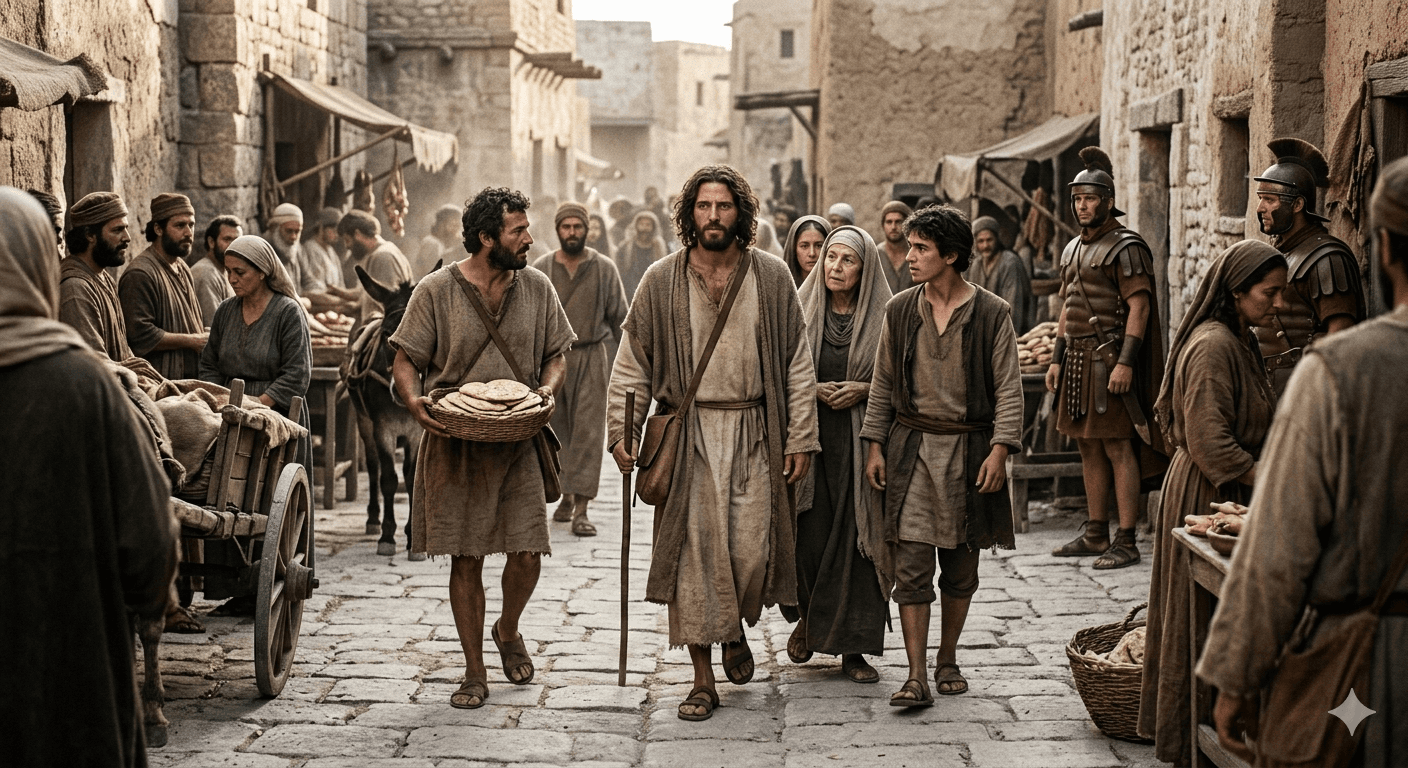
Christianity emerges from Judaism, and from everything Judaism had absorbed. Jesus of Nazareth was Jewish, interpreted the Hebrew scriptures, observed Jewish law, and was executed under Roman occupation in the context of Jewish messianic expectation. But the specific theological shape Christianity took as it spread through the Hellenistic world was profoundly influenced by the Greek-speaking, mystery-religion-saturated culture of the Roman Empire.
Paul's theology of "dying and rising with Christ" through baptism (Romans 6) directly parallels the initiation rites of Greek mystery religions [12]. The "Word made flesh" of John 1:1–14 draws on Stoic Logos philosophy. The Trinity, formalized at the Council of Nicaea in 325 CE, resolves theological tension using categories derived from Greek philosophical discourse (hypostasis, ousia, homoousios) that have no precedent in the Hebrew Bible [8].
Islam emerges from both, and acknowledges it. The Quran (610–632 CE) explicitly claims the Abrahamic chain as theology: Abraham (Ibrahim) is the founding patriarch; Moses (Musa) received the Torah; Jesus (Isa) was a prophet born of the Virgin Mary, performed miracles, and will return at the end of days, but was not crucified and is not divine [8]. Muhammad is the "seal of the prophets," restoring the original pure monotheism corrupted by Jewish and Christian innovations.
Islam is, in this sense, the most historically self-aware of the three Abrahamic religions. It openly positions itself as the corrected version. But like its predecessors, it insists that its correction is final: that the process of religious evolution ended with the Quran.
The Gods Who Traveled Under Different Names
A defining feature of pre-monotheistic religion was its extraordinary portability. The ancient world did not treat gods as exclusive national property. When empires collided or trade routes connected distant cultures, the gods traveled too and were translated.
The Greeks called this interpretatio graeca: the systematic identification of foreign deities with their own [15]. Herodotus, writing in the 5th century BCE, mapped it with confidence. Amun was Zeus. Osiris was Dionysus. Isis was Demeter. Thoth was Hermes. Horus was Apollo [15].
The Romans did the same. Zeus became Jupiter. Ares became Mars. Aphrodite became Venus. Hermes became Mercury. This was not mere renaming — it was theological fusion, a recognition that the same cosmic forces were being worshipped under different cultural packaging [15].
The transmission chains span millennia. Inanna, patron goddess of Uruk from c. 4000 BCE, became Ishtar in Akkadian, Ashtart in Ugaritic, Astarte in Phoenician, and likely influenced the development of the Greek Aphrodite [10]. Each translation preserved the core: love, war, the planet Venus, the lion as sacred animal. The "Queen of Heaven" title passed from Inanna to Ishtar to the Virgin Mary.
The storm god followed the same route: Enlil in Sumer became Adad in Babylon, Baal in Canaan, Zeus in Greece, Jupiter in Rome, and Thor in the Norse lands [10]. All are thunder-wielding lords of the divine assembly who dwell on sacred mountains.
The deepest layer of this transmission is linguistic. Proto-Indo-European religion, reconstructable through comparative linguistics from c. 4500–2500 BCE, produced cognate gods across cultures separated by thousands of miles and years. Dyēus Pḥ₂tēr (the reconstructed Proto-Indo-European sky father) became Zeus Pater in Greek, Jupiter ("sky father") in Latin, Tyr in Germanic, and Dyaus Pita in Vedic Sanskrit [11]. The same divine name. The same function. Spoken from India to Iceland.
Jan Assmann identifies this translatability as the fundamental operating principle of polytheistic religion [5]. The gods were international. Their names were interchangeable. Religious difference was a matter of vocabulary, not truth. It was monotheism (the insistence that only one God exists and all others are false) that broke this system. The "Mosaic Distinction," as Assmann calls it, made religious conflict inevitable by declaring the gods untranslatable.
December 25th and the Easter Goddess
Nothing illustrates religious evolution more tangibly than the two holidays most Christians consider uniquely their own.
No historical or astronomical evidence supports a December birth for Jesus. Shepherds do not tend flocks in open fields during Palestinian winter nights (Luke 2:8). The earliest Christian sources that place the Nativity on December 25 date to the Chronograph of 354 CE, over 300 years after the event [21].
What happened on and around December 25 before Christianity? Quite a lot.
The Roman festival of Saturnalia (December 17–23) featured a week of feasting, gift-giving, role reversals in which masters served slaves, the lighting of candles, and the election of a "King of Misrule." The customs transferred almost wholesale into Christmas tradition [13]. Emperor Aurelian established the feast of Sol Invictus (the "Birthday of the Unconquered Sun") on December 25, 274 CE, marking the winter solstice as the rebirth of the sun. The Germanic Yule was a twelve-day midwinter festival with decorated trees, burning logs, feasting, and gift-giving [13].
A counter-argument deserves honest treatment. Historian William Tighe has argued that the December 25 date was independently calculated by early Christians using the "integral age" theory: the belief that Jesus was conceived and crucified on the same date, March 25, making his birth nine months later [21]. This calculation appears in Hippolytus of Rome (c. 202 CE) and Tertullian (c. 200 CE), pre-dating Aurelian's Sol Invictus by seventy years. Tighe argues that the pagan festival was actually a response to an already-existing Christian observance [21].
The theory is scholarly and worth noting. But it does not account for why Christmas customs (trees, gifts, feasting, candles, the Yule log) are structurally identical to pre-existing pagan winter solstice celebrations across Europe [13]. Even if the date was calculated independently, the celebration absorbed its cultural DNA from Saturnalia and Yule.
Easter tells its own story. The English word "Easter" derives from the Anglo-Saxon goddess Ēostre, as documented by the Venerable Bede in 725 CE. Writing about the old English months, Bede noted that April (Ēosturmōnaþ) "was once called after a goddess of theirs named Ēostre, in whose honour feasts were celebrated in that month. Now they designate that Paschal season by her name" [16].
The spring equinox timing, the fertility symbolism of eggs and hares, and Bede's own testimony make the pagan substrate unmistakable. Jacob Grimm corroborated Ēostre's existence through comparative linguistics in 1835, and over 150 Romano-Germanic votive inscriptions from the 2nd–3rd century CE, discovered in 1958is near Morken-Harff in Germany, reference the matronae Austriahenae (goddesses whose name is etymologically cognate with Ēostre) [16].
Pope Gregory I made the strategy explicit. In a 601 CE letter to missionaries in England, he instructed them not to destroy pagan temples but to repurpose them: "Let them celebrate their feasts... so that they may be led more easily from the joy of old observances to the new religion." The absorption was not accidental. It was policy.
The Dying God: A Pattern Older Than Any Single Faith
The most theologically charged parallel between Christianity and its predecessors involves the dying-and-rising god, a motif that appears in religious traditions spanning three millennia before the Gospels.
Dumuzi (Sumerian, c. 2400 BCE) was Inanna's consort, killed as her substitute in the underworld, mourned annually. His cult was still practiced in Jerusalem at the time of the prophet Ezekiel: "There sat women weeping for Tammuz" (Ezekiel 8:14) [1].
Inanna herself (c. 1900 BCE) descended to the underworld, was killed, hung as a corpse for three days, and was resurrected through divine intervention — the earliest "three days dead and risen" narrative in the written record [1].
Osiris (c. 2400 BCE) was murdered by Set, dismembered, reassembled by Isis, resurrected, and became judge of the dead [4].
Attis (Phrygian, from c. 500 BCE) was a vegetation deity whose death and resurrection were ritually celebrated at the spring equinox in Rome (March 22 through 25) in a cycle of mourning followed by the festival of Hilaria (rejoicing). The calendar overlap with Holy Week is precise [12].
Dionysus (Greek) was the "twice-born" god, torn apart by Titans and reconstituted. Plutarch directly equated him with Osiris. His mystery cult promised eternal life to initiates through ritual meals and ecstatic communion [15].
A serious caveat is required. Jonathan Z. Smith's Drudgery Divine (1990) argues, persuasively, that the category has been overextended [19]. Osiris does not "rise" in the same sense as Christ. He becomes lord of the underworld, not a triumphant figure returned to earthly life. Attis's resurrection is disputed in the ancient sources. The details differ, sometimes significantly.
But the structural and ritual convergence is harder to dismiss. All of these traditions feature: communal mourning for a dead god, a period of death or descent (often three days), expectation of renewal, initiation rites promising personal immortality, and ritual meals in which participants commune with the divine [12] [9]. Whether these represent direct borrowing or parallel responses to the same human anxieties (the terror of death, the annual death and rebirth of vegetation, the need for communal catharsis) is debated. N.T. Wright has made the most sustained scholarly argument that Christian resurrection is historically and theologically unique [22]. His 817-page treatment commands respect.
The honest answer is that the truth lies in the middle. The Christ narrative is not a carbon copy of Osiris or Attis. But it emerged from a culture saturated in exactly these motifs: a Roman Mediterranean world in which dying-and-rising gods, mystery initiations, and salvation through divine identification were the religious air everyone breathed.
The Halos on Their Heads
Sometimes the smallest details are the most revealing.
The artistic convention of depicting holy figures with a circular glow (the halo, or nimbus) originated in Egyptian art as the sun disk of Ra, worn by pharaohs as a symbol of divine solar authority. Greek and Roman artists applied it to Helios and Apollo. The halo entered Christian iconography in the 4th century CE, precisely when Constantine legalized Christianity and partially absorbed the imagery of the Sol Invictus cult [10].
The virgin birth motif appears in Egyptian mythology (Isis conceiving Horus; Amun appearing to Queen Ahmose to father Hatshepsut), in Greek mythology (Zeus fathering Heracles, Perseus, and Dionysus through mortal women), and in Roman political theology (Augustus was said to have been conceived when Apollo visited his mother Atia) [10]. The ancient world, which lacked the modern understanding that both sperm and egg are required for conception, was rich in narratives of divine paternity. The Gospel accounts participate in this tradition, whether or not they transcend it.
Why They Want You to Believe It Never Changed
Here is the question that the historical evidence forces.
Religion has always evolved. The record is unambiguous. Sumerian theology became Babylonian mythology became Canaanite cult practice became Israelite religion became Judaism became Christianity became Islam, with Egyptian, Greek, Persian, and Roman contributions absorbed at every stage. The gods changed names. The rituals adapted. The doctrines were revised, expanded, and selectively pruned.
This process is not a scandal. It is evidence of the extraordinary depth and resilience of human spiritual imagination. The Sumerian worshipper who brought offerings to Inanna, the Egyptian mourning Osiris, the Christian lighting a candle at Easter, they are all participating in the same ancient impulse, shaped and reshaped across five thousand years of cultural contact. The forms change. The human need endures.
But institutional religion denies this, almost universally. Whatever historical changes occurred are reframed as corruptions to be purged, not evolutions to be understood. King Josiah's reform in 621 BCE destroyed the Asherah poles and the high places that had been part of Israelite worship for centuries, not to "purify" the faith, but to centralize it under a single temple and a single priestly authority [14]. The Council of Nicaea in 325 CE standardized Christian doctrine not purely for theological clarity but because Constantine needed a unified state religion for a fractured empire [8]. The Islamic doctrine of bid'ah (the condemnation of religious innovation as heresy) freezes practice at a particular historical moment, treating any development after the first generations as corruption.
The pattern recurs in every tradition. Evolution happens at the grassroots: through cultural contact, folk practice, pilgrimage, marriage, trade, and the simple human tendency to borrow what works. Ossification is imposed from the top, by priests, councils, inquisitions, and fatwas.
The institutional logic is straightforward. If doctrine is eternal and unchanging, then authority belongs to those who claim to be its authentic guardians. If doctrine is evolving (a living process shaped by human experience, cultural exchange, and the restless creativity of the religious imagination) then authority cannot be centralized. Every individual who encounters the sacred becomes a potential source of theological insight. Every culture that encounters another faith may generate a new synthesis.
A static religion concentrates power in those who guard the text. An evolving religion distributes power among those who experience the world.
And here lies the deepest irony. Whether or not you believe Jesus and Muhammad were prophets sent by God, what we do know (from the historical record their own followers preserved) is that neither man was constrained by the dogma of the religion he inherited. Jesus violated Sabbath law, ate with the unclean, challenged the Temple priesthood, and reinterpreted Mosaic commandments with the phrase "but I say unto you." Muhammad rejected the polytheism of Meccan Arabia, abolished idol worship at the Ka'aba, and overturned the tribal social order. Both men were, by the standards of the religious establishment they confronted, heretics. They evolved the tradition. That was the entire point.
The institutions built in their names now forbid what their founders actually did.
When William Tyndale was executed in 1536 for translating the Bible into English, the charge was heresy. The actual offense was making Scripture accessible without clerical mediation. When the Gnostic Gospels were suppressed in the 2nd through 4th centuries (texts that proposed radically different understandings of Christ, salvation, and the divine) the issue was not truth but authority. Who gets to define what Christianity means? The texts discovered at Nag Hammadi in 1945 reveal how much early Christian diversity was deliberately erased.
The question is not whether religion evolves. That question was answered by the cuneiform tablets of Sumer, the Pyramid Texts of Egypt, and the Dead Sea Scrolls of Qumran. Religion evolves. It has always evolved. Every cathedral and every mosque stands on foundations laid by traditions their builders would not recognize.
The question is who benefits from pretending otherwise.