
In 1912, Frederick Gates, the man who ran John D. Rockefeller's philanthropic education initiative, put the quiet part in writing. "We shall not try to make these people or any of their children into philosophers or men of learning," he wrote in the General Education Board's occasional papers. "The task we set before ourselves is simple... we will organize children and teach them to do in a perfect way the things their fathers and mothers are doing in an imperfect way." [2] [3]
Gates was not describing a conspiracy. He was describing a design philosophy. And while historians rightly debate how much that philosophy shaped what came after, its fingerprints are still visible in every public school classroom in America, from the bell schedules to the standardized tests to the tracking systems that quietly sort children by zip code and family income before they are old enough to understand what is happening to them.
The American education system serves 54.6 million students across roughly 130,000 schools [8]. It is the largest public institution in the country and, by many measures, the most consequential. It is also 150 years old in its basic architecture, and the world it was built for no longer exists. Twenty-eight percent of American adults now score at or below Level 1 in literacy, unable to handle multi-page documents or complex prose [9]. U.S. students score below the OECD average in mathematics [11]. And the economy these students are graduating into will, according to the World Economic Forum, see 39% of core job skills change by 2030 [15].
The question is not whether the system is failing. The data has answered that. The question is why it was built this way, why it has resisted every attempt at reform, and what would have to change for it to produce the kind of citizens and workers that a globalized, AI-disrupted world actually requires.
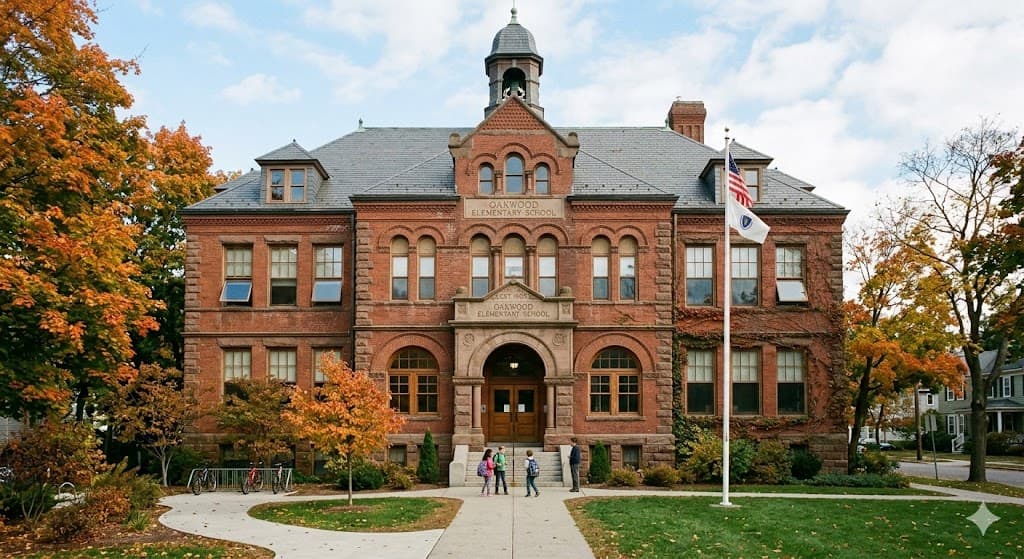
The Blueprint: Obedience by Design
Horace Mann traveled to Prussia in the 1840s and returned to Massachusetts convinced he had found the future of American schooling. The Prussian system was the most advanced in Europe: compulsory attendance, age-graded classrooms, standardized curriculum, professional teacher training. Mann wanted these tools for civic purposes. He saw a fragmenting young republic, waves of immigrants with no common language or culture, and sectarian schools that divided communities rather than unifying them [1].
What Mann imported, though, came with structural assumptions baked into the architecture. The Prussian model was designed for a monarchy that needed literate soldiers and obedient bureaucrats, not independent thinkers [1]. Age-grading locked children into cohorts regardless of ability. Bell schedules segmented the day into uniform blocks. Teachers lectured; students listened. The system could be adapted to different content, but its form carried a message: authority flows downward, compliance is the primary skill, and the institution's schedule matters more than the individual's learning.
The historian Audrey Watters has argued persuasively that the "factory model" label is more rhetorical device than documented design intent [1]. Mann's own language was about civic virtue and moral formation, not industrial output. But the structural features he championed produced a system that was, functionally, compatible with industrial-era workforce needs regardless of intent. You don't need a conspiracy when the architecture does the work for you.
By the early 1900s, powerful institutional forces had begun shaping that architecture more deliberately. The General Education Board, founded by Rockefeller in 1902 with backing from Andrew Carnegie, funneled enormous sums into public education with a particular emphasis on vocational and agricultural training for poor and rural youth [2]. The GEB's stated mission was education "without distinction of race, sex, or creed." Its practical effect was to steer working-class children toward manual skills while academic curricula remained the province of the economically privileged.
Then came the pivotal fork. In 1892, Harvard president Charles Eliot chaired the National Education Association's Committee of Ten. His recommendation was radically democratic: the same rigorous academic curriculum for all students, whether they were headed for college or the factory floor. Eliot believed in "mental discipline," the idea that intellectual rigor prepared a person for any future endeavor [1]. It was, for a brief moment, an institutional argument that every child deserved to think.
By 1918, that vision was dead. The NEA's Cardinal Principles of Secondary Education replaced intellectual development with seven functional goals: health, vocation, citizenship, worthy home membership, command of fundamental processes, worthy use of leisure, and ethical character [4]. Only one of the seven was directly academic. The others were about producing functional members of society in their designated roles. Historians interpret this as the moment American public education institutionally chose differentiation over equality, legitimizing tracking systems that sorted students by class and race into vocational versus college-preparatory pathways [4].
John Taylor Gatto, the New York State Teacher of the Year who spent 30 years in city classrooms, argued this outcome was intentional. He spent his career surfacing documents like the Gates quote, building a case that public education was deliberately designed to suppress independent thought [3]. Most academic historians contest his conspiratorial framing. David Tyack and Larry Cuban offer a more precise explanation: not deliberate design, but a "grammar of schooling" so deep that it produces the same results as if it were designed [5]. Age-graded classrooms, Carnegie units, 45-minute periods, letter grades, the teacher-in-front model: these structures are taken for granted as "what school is." Every reform that has tried to change them has been absorbed, adapted, or neutralized by the grammar itself.
The distinction between Gatto's conspiracy and Tyack's inertia matters intellectually. It does not matter much to the student sitting in a classroom that looks functionally identical to its 1920s predecessor.
The Parallel Track: Where Leaders Are Made
While the public system was standardizing and sorting, a parallel system was doing something entirely different. At Phillips Exeter Academy, 12 to 14 students sit around an oval Harkness table with a teacher who serves as facilitator, not lecturer [7]. Every discipline, from physics to poetry, is taught through discussion. Students arrive prepared, defend their reasoning, challenge each other's arguments, and leave with the habits of mind that define leadership: how to construct an argument, how to listen strategically, how to hold your position under pressure and how to update it when the evidence demands.
Exeter charges $73,000 a year [8]. Its alumni include a president, twelve U.S. senators, more than 35 members of Congress, and Mark Zuckerberg [7]. Phillips Andover produced both George H.W. Bush and George W. Bush. Franklin Roosevelt attended Groton. The list of elite prep school graduates who have occupied positions at the apex of American power is staggeringly long relative to the tiny number of students these schools enroll.
Sociologists Peter Cookson and Caroline Hodges Persell documented this pipeline in their landmark 1985 study, Preparing for Power. Their central finding was that elite boarding schools do not merely provide superior academics. They instill social norms, build networks, and cultivate a sense of belonging to a governing class [6]. The old boys' network is not a metaphor; it is a functioning system with alumni directories, counselor relationships with Ivy League admissions officers, and shared social codes that open doors closed to outsiders.
The numbers are extraordinary. Prep school graduates occupy an estimated 25 to 30% of seats at top-10 universities while comprising less than 2% of American high school graduates [8]. Harvard's Class of 2027 was approximately 70% private school graduates in a nation where private schools enroll roughly 10% of students. Legacy applicants to elite universities are admitted at rates two to five times higher than non-legacy applicants with comparable academic records. The Supreme Court's 2023 Students for Fair Admissions decision eliminated race-conscious admissions while explicitly preserving legacy preferences, effectively removing the only tool designed to counterbalance the pipeline while leaving the pipeline itself untouched [8].
The resource gap between these two systems is not marginal. Elite boarding schools spend $60,000 to $100,000 per pupil per year, combining tuition revenue with endowment income. The average U.S. public school spends $17,367 [8]. Student-teacher ratios at elite preps run 8-to-1 or 12-to-1; the national public school average is 16-to-1. Private school 8th graders are twice as likely to earn bachelor's degrees as their public school counterparts: 52% versus 26% [8].
These are not two versions of the same service. They are two different products with two different purposes. One teaches compliance and content delivery. The other teaches judgment, rhetoric, and how to wield institutional power. The sorting that Gates described in 1912 never required a formal policy. It required only two systems operating side by side, with price as the gate.
A Century of Failed Reform
If the architectural critique sounds familiar, that is because American education reform has been trying to address it for over a hundred years. It has failed every time.
Tyack and Cuban's "grammar of schooling" explains why [5]. The deep structural features of American schools operate below the level of conscious decision-making. Parents expect schools to look like the schools they attended. Teachers were trained in the existing model and reproduce it. Administrators manage within constraints that assume age-graded classrooms, period-based schedules, and whole-group instruction. Every new innovation enters the system, gets bent to fit the existing architecture, and ultimately leaves the fundamental design unchanged.
No Child Left Behind (2002) was supposed to force accountability through data. It did succeed in making achievement gaps visible: for the first time, schools had to report test results disaggregated by race, income, and disability. But its mechanisms were self-defeating. Adequate Yearly Progress goals were set so high that virtually every school in America would eventually be classified as "failing." Teachers narrowed their instruction to tested subjects. Curricula shrank. Schools became test-prep facilities while the deeper structural problems went untouched [10].
Common Core (2009-2010) took the opposite approach: standardize what students should know rather than how to punish them for falling short. Forty-five states adopted the standards within two years, driven partly by genuine belief in higher expectations and partly by the financial incentives of President Obama's Race to the Top grants. It lasted less than five years as a national project. Conservatives saw federal overreach. Progressives saw another testing regime. Teachers saw unfunded mandates imposed without adequate preparation time. At least five states formally withdrew; others quietly renamed the standards and carried on with minor modifications [27].
The Every Student Succeeds Act (2015) was the bipartisan acknowledgment that both approaches had failed. ESSA returned authority to states, explicitly barred the federal government from prescribing standards or curricula, and maintained only the transparency requirements that NCLB had established. It was, in the analysis of Columbia Law Review, "back to a future for education federalism," restoring the pre-NCLB assumption that states should solve their own problems [10].
The pattern is consistent across a century: new ideas enter, the grammar absorbs them, the architecture persists. Open classrooms in the 1970s. Standards-based reform in the 1990s. Data-driven accountability in the 2000s. Common Core in the 2010s. The instructional model that a time-traveling teacher from 1925 would recognize has survived every one of them.
The Verdict: What the System Actually Produces
The system's outputs tell the story the inputs predict.
The 2023 Program for the International Assessment of Adult Competencies found that 28% of American adults aged 16 to 65 score at or below Level 1 in literacy [9]. These are people who can handle simple texts and direct statements but struggle with multi-page documents, dense prose, or complex instructions. That figure rose from 19% in 2017, a nine-percentage-point deterioration that represents millions of additional adults who cannot navigate the written demands of modern employment, healthcare, or civic life. In numeracy, 34% of adults fall at or below Level 1, up from 29% [9].
The international benchmarks confirm the pattern. PISA 2022 placed the United States below the OECD average in mathematics for the first time, with a score of 465 against an average of 472. Twenty-five education systems outperformed U.S. students in math [11]. American students performed respectably in reading (504, above the OECD average of 476), reinforcing a longstanding asymmetry: the U.S. produces competent readers with weak quantitative skills, a profile poorly suited to a technology-driven global economy [21].
COVID-19 did not create these problems. It revealed them with brutal clarity, then made them worse. The 2022 NAEP showed the largest-ever recorded declines in mathematics in the history of the assessment, dating to the 1970s. Fourth-grade math dropped roughly five points from 2019; eighth-grade math dropped eight [10]. By 2024, recovery had stalled. Fourth-grade reading continued declining, now five points below pre-pandemic levels. Only 31% of fourth graders read at or above proficiency [10]. Eighth-grade reading and math showed no meaningful improvement. Lower-performing students, those who entered the pandemic with the least academic cushion, experienced the steepest declines and the weakest recovery [10].
McKinsey estimated that students in majority-Black schools fell six months behind in math during the pandemic, while students in low-income schools fell seven months behind, compared with five months overall [12]. The macroeconomic projection is staggering: $128 billion to $188 billion in annual GDP losses as the pandemic-affected cohort reaches working age [12]. The CDC's 2021 survey of high school students found 44% reporting persistent sadness or hopelessness and 20% seriously considering suicide [28]. These are not aftereffects waiting to fade. Four years out, 2024 NAEP data demonstrates that the system has not recovered.
Beneath the test scores, structural inequities operate with mechanical precision. The 1973 Supreme Court decision in San Antonio v. Rodriguez ruled that education is not a fundamental right under the U.S. Constitution and that wealth disparities between school districts do not constitute a suspect classification [13]. The case originated when San Antonio's Edgewood school district could raise only $26 per pupil from local property taxes while the neighboring Alamo Heights district raised $333 per pupil at a lower tax rate. That decision locked in property-tax-based funding as the national norm, ensuring that wealthy communities could afford exceptional schools while poor communities, despite taxing themselves at higher rates, could not come close. Per-pupil spending gaps between the richest and poorest districts within the same state can exceed 3-to-1 [13].
The school-to-prison pipeline completes the picture. Black boys comprise 8% of male students but account for 25% of male out-of-school suspensions, a disparity not explained by behavioral differences [14]. Students suspended multiple times are 90% more likely to be incarcerated by age 25. More than 500,000 students are arrested each year in American schools [14]. The system designed to provide opportunity for all operates, for a measurable subset of its students, as a direct pipeline to incarceration.
What the AI Economy Demands
The irony of the current moment is that the skills the American education system has systematically underdeveloped are precisely the ones the coming economy will reward most.
The World Economic Forum's 2025 Future of Jobs Report, surveying over 1,000 employers across 55 economies, identifies the top skills for the AI era: analytical thinking (rated essential by 69% of employers), resilience and flexibility (67%), leadership and social influence (61%), and creative thinking (57%) [15]. Demand for AI and Big Data skills is projected to rise 87% by 2030, but technological literacy alone is insufficient. The highest wage premiums accrue to workers who combine technical capability with human skills: the IMF finds that roles requiring four or more emerging skills command wage premiums of up to 15% in the UK and 8.5% in the U.S. [26].
MIT economist Daron Acemoglu offers the clearest analytical framework for what AI actually does to work. It does not eliminate entire occupations. It automates specific tasks within occupations [16]. Twenty percent of U.S. job tasks are exposed to AI capabilities under current technology, but less than 5% of entire occupations can be fully automated. What AI cannot do, and will not be able to do for some time, is exercise judgment in novel situations, navigate complex interpersonal dynamics, synthesize information across cultural and emotional contexts, or generate the kind of creative insight that requires embodied experience [16]. The workers who thrive will be those who complement AI's computational speed with distinctly human capabilities.
Goldman Sachs projects that 300 million full-time jobs worldwide are exposed to some degree of AI automation, and that 60% of the jobs that exist in the U.S. today did not exist in 1940 [17]. The historical lesson is that economies do create new work, but only for people equipped to do it. A system that produces adults with below-basic literacy and below-average math skills is not preparing its graduates for the economy that already exists, to say nothing of the one taking shape.
Consider the disconnect. Employers need analytical thinkers, creative problem-solvers, and resilient adapters. They are getting graduates of a system optimized for standardized test performance, curriculum compliance, and seat time. The WEF reports that 63% of employers identify skills gaps as their main barrier to business transformation [15]. Over 50% of the global workforce is already participating in upskilling and reskilling programs, an enormous market signal that the formal education system has failed to deliver what the labor market needs.
What Actually Works
The research on what produces educational results is not ambiguous. It is remarkably consistent across decades and national contexts. The problem has never been a lack of evidence; it has been a refusal to follow it.
McKinsey's 2007 analysis of 25 high-performing education systems found a single common thread: "The quality of an education system cannot exceed the quality of its teachers" [18]. Not curriculum, not technology, not class size. Teachers. Stanford economist Eric Hanushek quantified the stakes: a highly effective teacher produces roughly 1.5 grade levels of growth per year, while an ineffective teacher produces 0.5 [19]. That one-year gap per year compounds. Three consecutive years with effective versus ineffective teachers produces approximately a three-year achievement gap by middle school. Across a class of 20 students, the lifetime earnings difference between a highly effective teacher and an average one approaches $400,000 [19].
Finland and Singapore offer two very different models for implementing this insight. Finland recruits only the top 10% of university applicants into its teacher education programs, requires a master's degree for all teachers, and subsidizes five to six years of preparation entirely at government expense [20]. Teaching is the most popular career choice in Finnish higher education, more sought-after than medicine or law. Teachers have full autonomy over their methods and materials. Finland has no standardized testing before age 18 [20]. Its PISA results, while off their 2006 peak, remain well above the OECD average, and the relationship between a student's socioeconomic background and their academic performance is weaker than in almost any other developed nation [21].
Estonia, a country of 1.3 million people that emerged from Soviet occupation in 1991, is now the top-performing education system in Europe. Its 2022 PISA scores placed it first on the continent in science and among the top two in math and reading [21]. Estonia achieved this through a combination of universal early childhood education, comprehensive schools with no academic tracking before upper secondary level, heavy investment in digital infrastructure (the Tiger Leap program wired every school for internet in 1996), and a teaching profession that requires a master's degree and grants significant professional autonomy [22]. In 2025, Estonia launched AI Leap, providing free access to leading AI applications for 20,000 high school students and 3,000 teachers as a first phase of national AI literacy integration [22].
The United States does nearly the opposite of what this evidence recommends. It recruits teachers disproportionately from the bottom third of college graduates by academic selectivity [18]. It provides four-semester teacher preparation programs where Finland offers five-year master's programs. It subjects teachers to high-stakes accountability metrics where high-performing systems grant professional autonomy. It spends $18,000 per teacher per year on professional development (more than most countries spend total on teacher preparation) and gets minimal return: only about 30% of teachers show meaningful instructional improvement, according to TNTP's study of 10,000-plus teachers across four large school systems [29]. The money goes to disconnected workshops, not the structured coaching and collaborative lesson study that research links to actual improvement.
The evidence-based interventions exist at every level. James Heckman's Nobel Prize-winning economics research demonstrates that high-quality early childhood programs for disadvantaged children produce a 13% annual rate of return per dollar invested, far exceeding returns on any later educational intervention [23]. Benjamin Bloom demonstrated in 1984 that individual tutoring produces students who perform two standard deviations above conventionally taught peers, meaning the average tutored student would outperform 98% of students in a standard classroom [24]. A 2024 meta-analysis of 265 randomized controlled trials confirmed that high-dosage tutoring at scale can produce effect sizes of 0.3 to 0.4 standard deviations, enough to offset most pandemic-era learning losses if delivered during school hours at ratios of two or three students per tutor [24].
Raj Chetty's research at Harvard provides the mobility data. Ninety percent of children born in 1940 grew up to earn more than their parents. Today, only half do [25]. Low-income students are systematically underrepresented at selective colleges even when they have comparable test scores to wealthy peers; equalizing attendance rates by qualification would reduce underrepresentation by 38% [25]. The mechanism is not academic deficiency. It is informational: students in under-resourced schools do not know what is available to them, and the system does not tell them. The most important finding in Chetty's college mobility research is that low-income students who attend the same colleges as high-income students achieve similar earnings outcomes. Access is the bottleneck, not capability.
The Complication: Why Knowing Isn't Enough
If the evidence is this clear, why does the system persist? Several forces converge to make American education reform structurally resistant to evidence-based change.
The first is federalism itself. The U.S. operates roughly 13,000 independent school districts, each with its own board, budget, and curriculum decisions. There is no national curriculum, no centralized teacher preparation standard, and, after ESSA, no federal mechanism to compel states to adopt specific reforms. Finland has one teacher training model. The U.S. has over 1,500 teacher preparation programs of wildly varying quality. What works in one district may never reach the next one.
The second is the constituency problem. Parents want schools that look like the schools they remember. Taxpayers resist funding increases. Teachers' unions protect working conditions, sometimes at the expense of structural changes that evidence supports. Testing companies, textbook publishers, and educational technology firms all profit from the existing architecture. No single constituency has both the incentive and the power to force structural change.
The third is the measurement problem. The return on early childhood investment shows up in crime statistics 30 years later. The value of a great teacher compounds over a student's lifetime but is invisible in any single school year's assessment data. Political cycles run two to four years. The interventions that produce the largest returns operate on timescales that no elected official will be around to take credit for.
And the fourth is ideological capture. American education debates are fought along partisan lines that have little relationship to evidence. Conservatives push school choice, vouchers, and deregulation. Progressives push funding increases, equity mandates, and union protections. Neither agenda is organized around the research findings. The interventions with the strongest evidence base (selective teacher recruitment, early childhood investment, structured tutoring, formative assessment) do not map neatly onto either political platform.
Stanford's 2019 civic online reasoning study found that 52% of American high school students believed a grainy, misleading video of Russian origin constituted "strong evidence" of U.S. voter fraud. Ninety-six percent did not think to question a climate website's ties to the fossil fuel industry [30]. Only 3 out of more than 3,000 student responses successfully traced the video to its actual source. These students will soon be voters, jurors, and community members making decisions about school board elections, tax levies, and the very reforms described in this article. The system's failure to teach critical evaluation of information is not a peripheral concern. It is the failure that makes all other failures harder to correct.
What Rebuilding Would Require
The evidence does not point to a single reform. It points to a structural reimagining that touches every layer of the system.
Teacher preparation and recruitment must be transformed. The single highest-leverage intervention available to any education system is changing who enters the teaching profession and how they are prepared. This means selective admission (top 25 to 30% of graduates), fully subsidized master's-level preparation lasting five or more years, structured mentoring for new teachers, and compensation sufficient to compete with other professions that recruit from the same talent pool. Finland and Singapore demonstrate that this approach works at national scale. The investment pays for itself through reduced turnover alone; replacing a single teacher costs $12,000 to $25,000 depending on district size, and the U.S. loses roughly 7% of its teaching force annually, with 90% of vacancies caused by attrition rather than growth [19] [29].
Early childhood investment must become a national priority. Heckman's 13% ROI is not a theoretical projection; it is an empirical finding from programs tracked across decades [23]. The Perry Preschool Project returned $12.90 for every dollar invested, with 70% of the public benefit coming from reduced criminal justice costs. Universal high-quality pre-K for disadvantaged children is the most efficient use of education dollars available. The key word is quality: programs that follow evidence-based designs with credentialed teachers, intentional curriculum, and low student-to-teacher ratios produce lasting results. Diluted programs produce diluted results.
AI and media literacy must be integrated across the curriculum. Estonia's AI Leap program demonstrates that this can happen quickly and at national scale [22]. Finland's decades-long integration of media literacy across all subjects, starting in early childhood, has produced the most misinformation-resilient population in Europe for six consecutive years. The SIFT method (Stop, Investigate the source, Find better coverage, Trace claims) can be taught in a single class period and produces measurable improvements in students' ability to evaluate digital information [30]. These are not optional enrichments for the curious. They are survival skills for democratic citizenship in an era of synthetic media and algorithmic information feeds.
Vocational and technical pathways need to be rebuilt with dignity. Germany's dual apprenticeship system trains 1.3 million people at any given time across 330 recognized professions. Fifty-one percent of the entire German workforce holds vocational qualifications. Two-thirds of apprentices are hired directly by their training company [15]. The P-TECH model, which combines a high school diploma with a free associate degree and first-in-line employment consideration from corporate partners like IBM, has scaled to over 300 schools in 28 states serving predominantly low-income and minority students [15]. The American bias toward four-year college degrees as the only legitimate pathway to middle-class life is both empirically wrong and economically costly.
Funding must be decoupled from property wealth. So long as school quality is a function of zip code, the system will reproduce inequality by design. The $23 billion annual spending gap between predominantly nonwhite and predominantly white school districts is a structural feature of property-tax-based funding, not a temporary condition that market forces will correct [13]. State-level court battles have produced partial fixes. A federal equity mechanism, one that ensures baseline adequacy regardless of local tax capacity, remains the intervention that Rodriguez foreclosed in 1973 and that no subsequent legislation has replaced.
None of this is unknown. Every recommendation listed here is supported by multiple high-quality studies, international comparisons, and in most cases decades of replicated findings. The quality of an education system cannot exceed the quality of its teachers [18]. The return on early investment exceeds the return on late intervention [23]. The skills the AI economy requires are the skills the current system underproduces [15].
The architecture built in the 1840s, refined by industrial philanthropists in the 1900s, and frozen in place by institutional inertia ever since was designed for a world that required many obedient workers and a few independent thinkers. That world is gone. The one replacing it will sort people not by their willingness to comply, but by their capacity to think, adapt, and create. Every year the system goes unchanged, another cohort of students graduates into a world their education did not prepare them for, carrying the cost of a design philosophy that outlived its purpose by a century.